Healthcare is undergoing one of the most significant technological transformations in history.
Artificial Intelligence is at the center of this transformation, enabling healthcare startups to deliver more personalized, efficient, and scalable solutions than ever before.
For countries such as the UAE, where healthcare innovation is a strategic priority, AI presents enormous opportunities for entrepreneurs.
From Reactive Care to Preventive Care
Traditional healthcare often focuses on treating problems after they occur.
AI enables a shift toward prevention.
By analyzing health data, symptoms, lifestyle factors, and medical history, AI systems can identify risks before serious conditions develop.
This proactive approach can improve outcomes while reducing healthcare costs.
Personalized Healthcare Experiences
Every patient is unique.
AI allows healthcare startups to provide recommendations tailored to individual circumstances.
These may include:
- Nutrition guidance
- Lifestyle recommendations
- Fertility insights
- Pregnancy monitoring
- Chronic disease management
- Medication adherence support
Personalization improves both engagement and clinical effectiveness.
Supporting Healthcare Professionals
AI is not replacing doctors.
Instead, it helps healthcare professionals work more efficiently.
AI can assist with:
- Medical documentation
- Clinical decision support
- Data analysis
- Risk assessment
- Patient monitoring
This allows clinicians to spend more time focusing on patient care.
Expanding Access to Healthcare
Many healthcare systems face resource constraints.
AI-powered digital health solutions can expand access to medical information and support services, particularly in underserved communities.
This is especially valuable for preventive healthcare, fertility management, maternal health, and chronic disease monitoring.
The Future of Digital Health
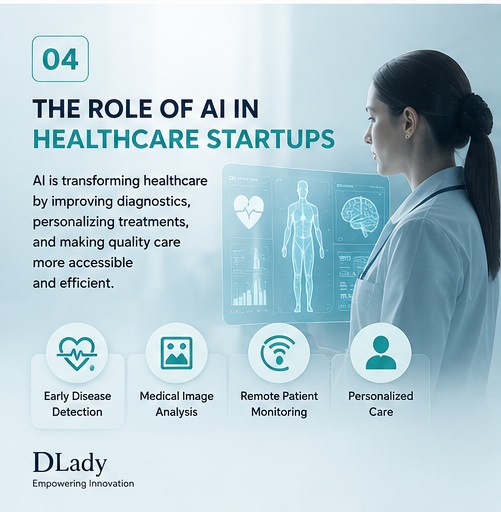
As healthcare becomes increasingly digital, AI will continue to play a larger role in diagnosis, monitoring, patient engagement, and personalized care.
Healthcare startups that successfully combine medical expertise with artificial intelligence will be well-positioned to shape the future of healthcare delivery.